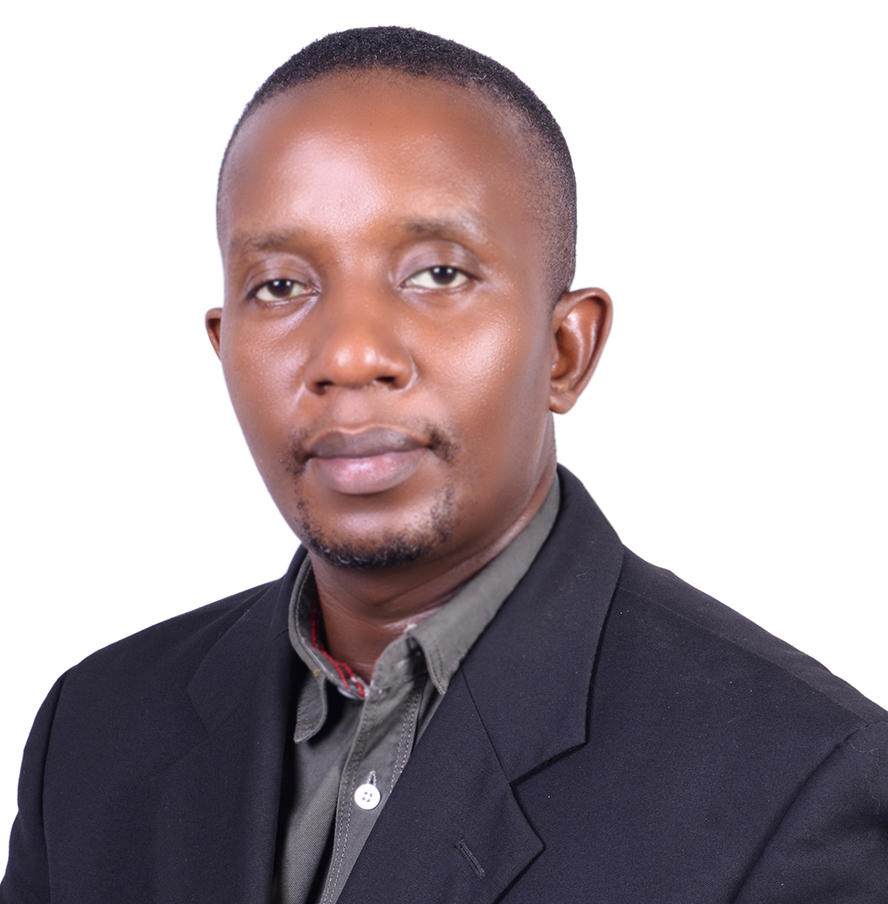
A Global Biography of Conservation Leadership, Sustainable Tourism, Sustainability Science, and Ecological Governance
Dr. Taddeo Rusoke PhD is a globally recognised Ugandan conservation scientist, sustainability expert, and academic leader whose career stands at the intersection of environmental governance, sustainable tourism planning, and higher education management. Over a distinguished sixteen-year career spanning institutions across Africa, Europe, Asia, and North America, Dr. Rusoke has pioneered models for human-wildlife coexistence, secured major international funding, and shaped global policy frameworks.
As a designated Member of the National Research and Conservation Committee in Uganda, a Senior Research Associate at Imperial College London, an Adjunct Professor at Al-Azhar Indonesia University, and a Research Associate at Stellenbosch University, his academic and practical footprint is profoundly transnational. His overarching philosophy treats environmental preservation not as an isolated ecological mandate, but as a socio-economic imperative that must harmonise with community prosperity and livelihood development.
Early Life, Foundations, and Academic Genesis
Born on April 27, 1985, in Uganda, Dr. Rusoke developed a deep-rooted commitment to the natural landscapes and communities of East Africa. He began his formal academic journey at Nkumba University in Uganda, where he pursued a Bachelor of Science in Wildlife Management Sciences. Demonstrating early scholastic excellence, he graduated with a First-Class degree, specialising in ecotourism, tourism planning, and management. This foundational education combined rigorous ecological field training with the strategic tenets of sustainable tourism development.
Recognising that modern conservation failures often stem from a misalignment between environmental health and public policy, Dr. Rusoke expanded his expertise by pursuing a Master of Science in Environmental Health at Nkumba University between February 2011 and October 2012. His post-graduate research focused on Sustainable Development and Protected Area Planning and Management, equipping him with the multi-disciplinary skills necessary to navigate complex socio-ecological systems.
The culmination of his formal academic training arrived with his Doctor of Philosophy (PhD) in Natural Resources Management (Conservation Sciences), which he completed at Nkumba University between September 2017 and October 2021. His doctoral dissertation focused on the Biodiversity and Livelihoods of Communities Bordering Protected Areas, a thematic concentration that would define much of his subsequent global research and field interventions.
To further build his technical capacities, Dr. Rusoke obtained specialised postgraduate certifications from premier international bodies. He completed a Postgraduate Certificate (PGCE) and a Certificate in Nature-based Tourism, Biodiversity, and Livelihoods through the College of Public Administration and Community Solutions at Arizona State University, USA. Additionally, he secured a Certificate in Nature-based Solutions for Disaster and Climate Resilience via the SDG Academy and the United Nations Environment Programme (UNEP) in 2022, alongside certifications in Climate Governance from the Centre for United Nations Constitutional Research in Belgium.
Pioneering Methodologies: The Buffer Crop Farmers Model (BCFAM)
One of Dr. Rusoke’s most significant contributions to contemporary conservation science is his conceptualisation, testing, and implementation of the Buffer Crop Farmers Model (BCFAM). For decades, communities living adjacent to wildlife-protected areas across Sub-Saharan Africa have suffered severe economic disruptions due to crop depredation by large mammals, such as elephants and baboons, leading to intense human-wildlife conflict and retributive poaching.
Dr. Rusoke approached this problem through a “convivial conservation” lens, seeking methods that protect both human food security and animal populations. His research led to the publication of his definitive text, Buffer Crops Farming against Wild Animal Damage on Crops in Uganda (2023, Marianum Press). The BCFAM framework applies precise ecological and agricultural principles, encouraging smallholder farmers to cultivate unpalatable, high-value non-timber crop matrices along protected area boundary lines. These buffer zones serve as natural deterrents to wildlife while establishing alternative income streams for local families.
Between 2017 and 2020, Dr. Rusoke acted as Principal Investigator on a large-scale field operationalisation of this model around Kibale National Park in Western Uganda. The project directly engaged 14,000 smallholder households, mapping readiness, distributing seed stocks, and evaluating the scientific efficacy of buffer crops in minimising agricultural loss. His subsequent field evaluations, conducted in partnership with the Uganda Wildlife Authority (UWA) across 396 crop-farming households, confirmed that strategic agricultural barriers drastically minimised elephant crop depredation compared to traditional, high-conflict deterrents like manual trenching.
Global Academic Governance and Professional Affiliations
Dr. Rusoke’s professional responsibilities are distributed across prominent academic, editorial, and advisory boards globally.
Institutional Leadership & Professorships
-
Mountains of the Moon University (Fort Portal, Uganda): Appointed in May 2024, Dr Rusoke serves as Senior Lecturer and Head of the Department of Tourism and Hospitality Management within the Faculty of Agriculture and Environmental Sciences. In this role, he directs annual strategic work plans, oversees departmental budgeting, manages institutional funds, and spearheads Competency-Based Education (CBE) curricula designed to meet local and international workforce needs.
-
Al-Azhar Indonesia University (Jakarta, Indonesia): Dr. Rusoke serves as Adjunct Professor of Sustainable Tourism and Ecotourism Enterprise Development, where he provides doctoral mentorship and technical oversight regarding the intersection of tourism economics and ecological governance.
-
Imperial College London (United Kingdom): As a Senior Research Associate at the Centre for Environmental Policy, he serves as an expert informant for Sub-Saharan African conservation metrics, steering high-level data models on community conservation adoption.
-
Stellenbosch University (South Africa): Operating as a Research Associate for the African Wildlife Economy Institute (AWEI), Dr. Rusoke conducts policy research centered on wildlife use rights and sustainable financing mechanisms across the continent.
-
INTI International Universities (Malaysia): Since October 2023, he has held a concurrent position as a Research Fellow, maintaining a highly active research output focused on top-tier peer-reviewed manuscript development.
International Board Governance
-
Global Centre for Risk and Innovation (Canada): Dr. Rusoke sits as a Board Member on the Academic Leadership Board representing Sub-Saharan Africa. This body functions as an official advisory entity to the United Nations Economic and Social Council (UN-ECOSOC). Here, he collaborates with multidisciplinary teams integrating Artificial Intelligence (AI), Machine Learning (ML), and Quantum Computing to build predictive models for Environmental, Social, and Governance (ESG) solutions.
-
Leiden University Press (Netherlands): Serving as an active Board Member, he provides specialised technical editorial oversight for academic book manuscripts originating from Africa and Europe, validating transcontinental scholarly research.
International Research Grants and Project Portfolios
Throughout his career, Dr. Rusoke has designed, secured, and coordinated an extensive portfolio of individual and collaborative research grants. His project management experience spans multiple international donors, government ministries, and non-profit funds.
United States Forest Service (USFS) Department of Agriculture
In the 2023/2024 cycle, Dr. Rusoke served as Project Lead and Contact Person for three interconnected ecotourism and forest-based livelihood grants centered around Kibale National Park:
-
Women in Forest-Based Enterprise Development: Focused on establishing sustainable basketry practices, value addition, and international marketing structures to reduce female dependence on wood extraction from protected zones.
-
Youth Ecotourism Site Guides: An employment initiative designed to train local youth in professional guiding, species identification, and hospitality management, transforming potential poachers into active conservation custodians.
-
Medicinal Plant Value Chains: A targeted research project addressing the sustainable harvesting of traditional medicinal flora, establishing formal value chains and market access for rural women.
Transnational and Inter-University Collaborations
Dr. Rusoke coordinated the Sustainable Tourism Enhancement Project in the Lake Victoria Basin (2022–2024), an international project funded by BOKU University (Austria) and jointly implemented by Nkumba University (Uganda) and Maseno University (Kenya) to study eco-tourism models across fragile lake ecosystems. Furthermore, as Principal Investigator in 2026, he assumed control of the Trade Regulation Assessment on the Management of Fishing Villages in the Queen Elizabeth Conservation Area, a project funded directly by the Government of the Republic of Uganda through the Ministry of Tourism, Wildlife and Antiquities.
Multi-Country Ecosystem and Public Health Initiatives
From 2018 to 2021, Dr. Rusoke served as a lead researcher in a major multi-country study funded by the Bill and Melinda Gates Foundation and the African Capacity Building Foundation (ACBF). Managed via Sefako Makgatho Health Sciences University (South Africa) and the African Centre for Tobacco Industry Monitoring and Policy Research (ATIM), the project, titled “Building Effective Tobacco Control Advocates in Africa (BETA),” spanned twelve African nations (including Nigeria, Kenya, Uganda, Ethiopia, Ivory Coast, Benin, Mauritania, South Africa, Botswana, Gabon, Senegal, and The Gambia).
Dr. Rusoke successfully targeted approximately 78,000 agriculturalists in Uganda alone, researching ways to scale down tobacco farming—which severely degrades natural forest ecosystems—and transitioning those agricultural landscapes toward sustainable food crops and regenerative agro-forestry systems.
Combatting the Illicit Wildlife Trade (IWT)
A major pillar of Dr. Rusoke’s fieldwork involves investigating and mitigating the illicit wildlife trade across East and Southern Africa. As the Founder and Director of Africa One Consult LTD, he oversees a dedicated division of 15 senior conservation professionals focusing heavily on gender- and conflict-sensitive data collection.
During his tenure as the Executive Director and Project Lead for the Wildlife Clubs of Uganda (April 2023–November 2024), Dr. Rusoke forged operational alliances with the Uganda Wildlife Authority (UWA), WildAid Africa, and the Uganda Wildlife Conservation Education Centre (UWEC). Together, they launched extensive counter-trafficking public awareness campaigns and engineered specialized audio-visual tools designed to alter local community perceptions regarding the consumption of bushmeat and the sale of illegal wildlife products.
Dr. Rusoke’s work in this domain includes practical field law enforcement strategy. In coordination with UWA’s Crimes and Investigations Unit and Community Conservation Units, he designed comprehensive survey tools and field manuals detailing the identification of illicit wildlife goods. His documentation outlines critical observation parameters for law enforcement officers:
“Where to look out: Cargo packages, Vehicles, especially those leaving key protected wildlife areas, homes of suspected perpetrators, and restaurants. What to look out for: Whole animals, animal parts such as pangolin skins, scales, ivory, animal products such as meat, and types of equipment used especially for the case of poaching.”
Through these integrated school and community distributions, Dr. Rusoke’s anti-poaching and counter-trafficking literature successfully reached over 150,000 learners across Uganda, embedding conservation literacy into primary and secondary educational systems.
A Prolific Literary and Peer-Reviewed Legacy
Dr. Rusoke’s research contributions are documented across books, book chapters, and numerous peer-reviewed papers in high-impact international journals. His literary portfolio displays a strong mastery of qualitative, quantitative, and mixed-method scientific inquiry.
Published Books & Monographs
-
Rusoke, T. (2023). Buffer Crops Farming against Wild Animal Damage on Crops in Uganda. Marianum Press Limited, Kisubi, Uganda. ISBN: 978-9913-615-31-0.
-
Rusoke, T., & Mirembe, D. (2026). Chimpanzee Politics in Uganda (In Press).
High-Impact Book Chapters
-
Rusoke, T. (2025). “Promoting Sustainable Agricultural Livelihoods and Human-Wildlife Coexistence: The Role of Electric Fencing in Communities Adjacent to Murchison Falls National Park, Uganda.” In Biodiversity and Ecosystem Services in Sub-Saharan Africa: Securing Livelihoods and a Sustainable Future. Springer Nature (In Press).
-
Rusoke, T. (2024). “Global Warming and Climate Change: Projections and Implications (on Tourism, Health, Fisheries, Agriculture in Africa).” In Muhammad A., Guller S., & Muhammad K. (Eds.), Handbook of Energy and Environment in the 21st Century – Technology and Policy Dynamics (pp. 335-356). CRC Press, Routledge – Taylor & Francis. ISBN: 9781032715421.
-
Businge, P., Rusoke, T., Mbabazi, G., Bitamazire, A., Mpanga, J., & Guma Komwiswa Adyeri (2019). “The Hidden Treasures in the Tooro Kingdom.” In The Great Kingdom of Tooro: Discover its Friendly People, Amazing Culture and Hidden Treasures. Greatness University Publishers, London, UK. ISBN: 978-1-913164-99-7.
Key Peer-Reviewed Journal Articles
-
Pienkowski, T., Clark, M., Rusoke, T., et al. (2025). “Diagnosing scaling bottlenecks in ten community conservation initiatives in South and East Africa.” Conservation Biology, 40, e70149.
-
Rusoke, T., & Makobore, D. (2026). “Peak Seasons, Pushed Limits: Effect of Visitor Density and Seasonality on the Diet and Stress Behaviours of free-ranging Black and White Colobus Monkeys at Uganda Wildlife Education Conservation Centre (UWEC), Entebbe, Uganda.” Wild (In Press).
-
Turyamureba, V., Kalukusu, A. R., & Rusoke, T. (2026). “Gender and Community Forestry: Analysing Women’s Engagement in Forestry Management near Bidibidi Refugee Settlement, Uganda.” International Journal of Forestry Research, John Wiley & Sons Inc. DOI: 10.1155/ijfr/9931525.
-
Engoru, P., Rusoke, T., Aine-Omucunguzi, A., et al. (2025). “Population Status and Distribution of Grey Crowned Cranes (Balearica regulorum) in Uganda: A Comprehensive Country-wide Census.” Oryx (In Print).
-
Kigenyi, R., Talibita, M., & Rusoke, T. (2024). “Community-Led Participatory Forest Monitoring for the Restoration of Kibale National Park (KNP) in Western Uganda.” Journal of Global Ecology and Environment, 20(4), 115-125.
Nurturing Next-Generation Scholars: Academic Supervision
Dr. Rusoke maintains an extensive commitments list regarding international postgraduate and undergraduate student supervision, ensuring the rigorous transfer of interdisciplinary skills to the next generation of African scientists.
Doctoral Level (PhD Supervision & Examination)
-
Uwayo Pacifique (2025–2028, Nkumba University): The Nexus Between Wetland Ecosystem Services and Community Livelihoods: A Framework for Sustainable Ecotourism in the Muvumba River Basin, Nyagatare District, Eastern Province, Rwanda.
-
Kayiira Martin (2025–2028, Nkumba University): Public Art Projects Contribution to the Revitalisation of Urban Public Space in Entebbe Municipality, Central Uganda.
-
Mukalazi Frank (2024–2027, Nkumba University): Anthropogenic Disturbances on Survival and Reproduction of Highland Bamboo in Echuya Central Forest Reserve, South-Western Uganda.
-
Aharikundira Margaret (2024–2027, Nkumba University): Integrated Water Resource Management and Sustainable Climate Resilient Water Investment in Uganda.
-
External Examination Roles (2023–2026): Dr. Rusoke successfully vetted and examined highly specialised doctoral theses, including Cultural Ecology of Totemism: Examining the Intersection of Clan Practices and Biodiversity Conservation in the Buganda Kingdom, Uganda (2026) and Community Empowerment and Ownership of Tourism Enterprises in Musanze District, Rwanda (2024).
Master of Science (M.Sc.) Level Mentorship
Dr. Rusoke has guided numerous M.Sc. scholars through fieldwork design and completion at Mountains of the Moon University and Nkumba University, including:
-
Nuwabiine Dorothy (2022–2025): Assessing climate variability impacts on the foraging behaviours of red colobus monkeys inside Kibale National Park.
-
Mirembe Vannice (2025): Evaluating the real-world performance of high-voltage electric fences in mitigating human-elephant conflicts around Murchison Falls National Park.
-
Juliet Nakate (2025): Investigating natural forest degradation and human-chimpanzee conflict within the critical Bugoma-Budongo Forest Corridor.
Global Footprint: Keynotes, Symposia, and Presentations
Dr. Rusoke is a frequent speaker and facilitator at prominent environmental and academic conferences worldwide. His speaking record spans thematic areas from regenerative agriculture to sustainable real estate frameworks.
-
Germany (April 2026): Selected for the Erasmus+ Mobility Workshop on International Academic Ties hosted at the Weihenstephan-Triesdorf University of Applied Sciences in Bavaria.
-
India (April 2026): Acted as Lead Facilitator for the Kodai Wildlife Conservation Trust (KWCT) in Tamil Nadu, delivering the strategic address: Forest-based Eco-Enterprises for Global Community Resilience.
-
Indonesia (July 2025): Served as Plenary Facilitator at the EXSACTA 2025 International Seminar hosted by Universitas Al Azhar Indonesia, presenting Forging a Sustainable Future: A Decade of Progress and a Vision for 2030 in East African Conservation and Development.
-
Ghana (November 2024): Invited as a guest speaker at the Africa Continental Engineering and Construction Real Estate Summit in Accra, introducing a framework titled The Future of Forest Conservation in the Wake of Rising Global Housing Demand: Opportunities, Threats, and Way Forward for Africa.
-
United Kingdom (December 2021): Served as Global Coordinator and Keynote Speaker at the Global Sustainable Futures Conference in London, broadcasting a globally viewed address on Improving human-wildlife co-existence through implementing Inclusive Sustainable Conservation Models (ISCM) in Africa.
Distinguished Recognitions, Honours, and Awards
Dr. Rusoke’s extensive contributions have earned him several prestigious global and national awards:
🏆 The World Greatness Award (2025)
Awarded by Greatness University during the continental assembly in Zanzibar, recognizing Dr. Rusoke’s outstanding accomplishments and long-term excellence in Nature Conservation across the African continent.
🎖️ The Human-Wildlife Harmonious Living Award (2024)
Awarded formally by the Government of the Republic of Uganda in recognition of his practical field innovations, specifically the BCFAM model, which directly advanced the peaceful coexistence of rural populations and protected wildlife species.
🏅 GSFN Platinum Awards (2022 & 2023)
Conferred by the Global Sustainable Futures Network (United Kingdom), he received the 2022 Platinum Award for Sustainability Sciences in Uganda and the consecutive 2023 Platinum Award for excellence in Social Media Engagement and Promotion of sustainable environmental practices.
Academic Qualifications:
-
PhD in Natural Resources Management (Conservation Sciences) – Nkumba University, Uganda.
-
MSc in Environmental Health – Nkumba University, Uganda.
-
BSc in Wildlife Management Sciences – Nkumba University, Uganda.
-
Specialised Certifications: General Conservation (Arizona State University, USA); Nature-Based Solutions for Disaster and Climate Resilience (UNEP & SDG Academy); Climate Governance (Centre for United Nations Constitutional Research, Belgium).
Personal Life and Future Horizons
Despite a demanding international schedule, Dr Rusoke remains deeply grounded in his home country of Uganda. He is married and is a dedicated father to four children. Balancing family life with intensive field research, his ongoing work into late 2026 focuses on major pending transnational research programs.