
At the foot of the Rwenzori Mountains, where rivers often turn from lifelines into torrents of destruction, a new wave of community resilience is taking root. Through the Building Socio-Ecological Resilience of Communities to Flash Flooding in the Rwenzori Mountains (B-SaFFeR) Project, local leaders, VSLAs (Village Savings and Loan Associations), and disaster committees in Kasese District are learning to turn vulnerability into strength, one training, one saving group, and one mindset shift at a time.
Hosted at Rwenzori International University in Kasese Municipality, the four-day Disaster Risk Reduction and VSLA Integration Training that commenced on Tuesday 11th/11/2025, convened dozens of community representatives from youth volunteers to local council leaders, under a shared goal of integrating financial resilience into disaster preparedness, response, and long-term adaptation.
The training is part of a broader multi-stakeholder project, delved into the Kasese-specific disaster landscape from floods and landslides to the creeping impacts of heatwaves. Trainees explored how Village Savings and Loan Associations (VSLAs), often viewed purely as economic tools, can evolve into engines of resilience that help communities prepare for, withstand, and recover from natural hazards.
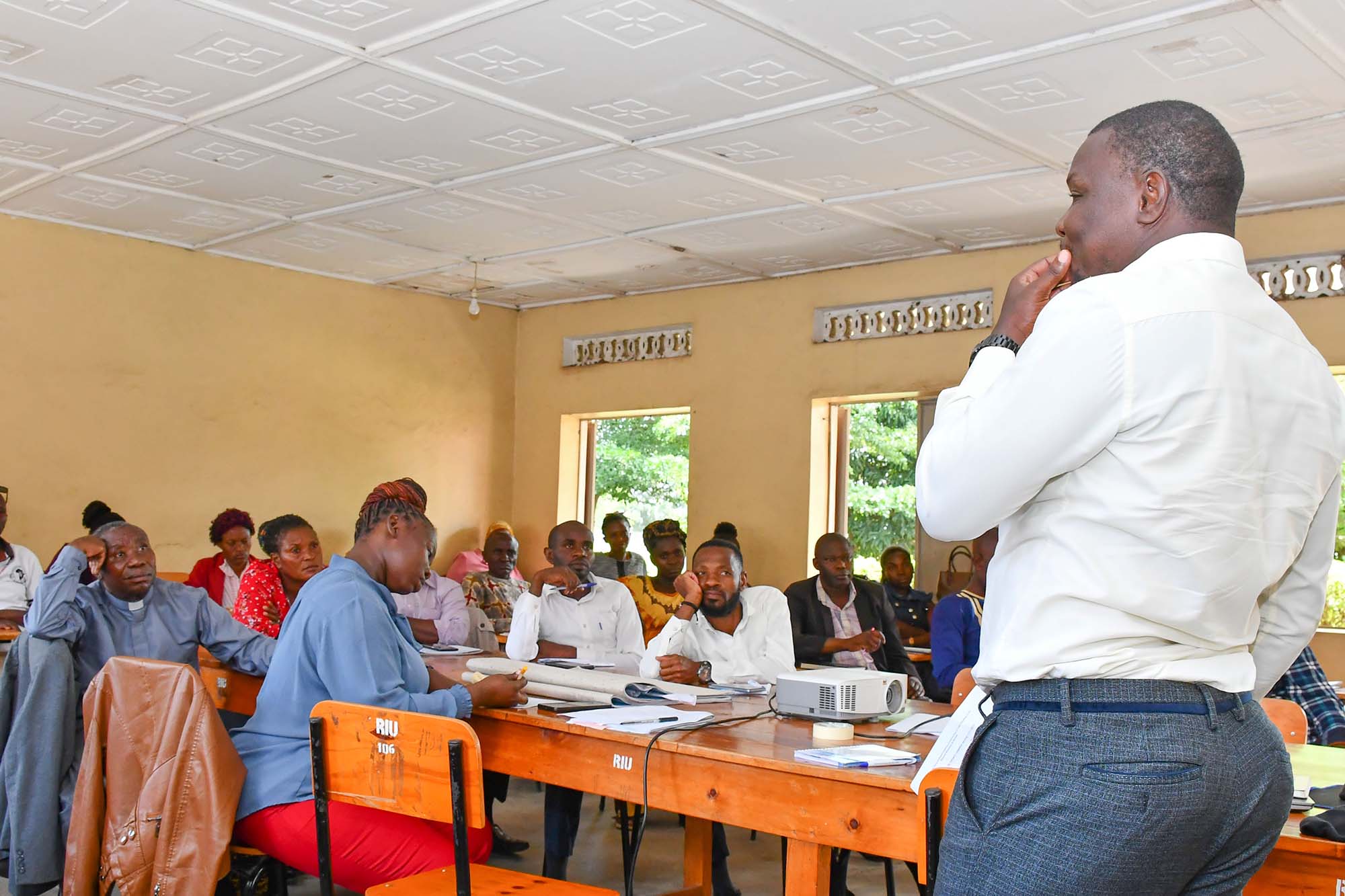 Dr. John Sekajugo, Project Principal Investigator (PI) and Head of the Department of Environmental Sciences at Mountains of the Moon University (MMU), emphasized that the central challenge in disaster management lies in changing community mindsets. He noted that while local people understand the rhythms of their environment like when to plant, when the rains are coming, and even when floods may occur, they often act only after disasters strike. The project, he explained, seeks to bridge that gap by combining scientific knowledge with practical community engagement, enabling people to anticipate and plan for hazards rather than merely respond to them.
The project, implemented by Mountains of the Moon University and Uganda Martyrs University in partnership with Vrije Universiteit Brussel, KU Leuven, Join for Water, Thrive Research and Innovation Facility, Africa Museum, TU Delft, AP Hogeschool Antwerpen, and local organizations, is redefining how communities in the flood-prone Rwenzori ranges engage with risk. The project’s participatory approach is intentional, ensuring that community representatives, government institutions, NGOs, media, and cultural and religious leaders all take ownership of the process, while the implementing partners act mainly as facilitators.
This week’s training coincided with an Advisory Committee meeting held at the same venue, where partners reviewed progress from the first year and discussed plans for the next phase of implementation. The committee meets twice a year, serving as a bridge between policy, academia, and the lived realities of flood-affected communities in the Nyamwamba and Nyamugasani catchments.
Among the project’s groundbreaking components is the development of community-based flood risk insurance schemes, locally dubbed “solidarity savings groups.” Through these, communities will pool resources via VSLAs to create social protection cushions that can help members recover faster after disasters.
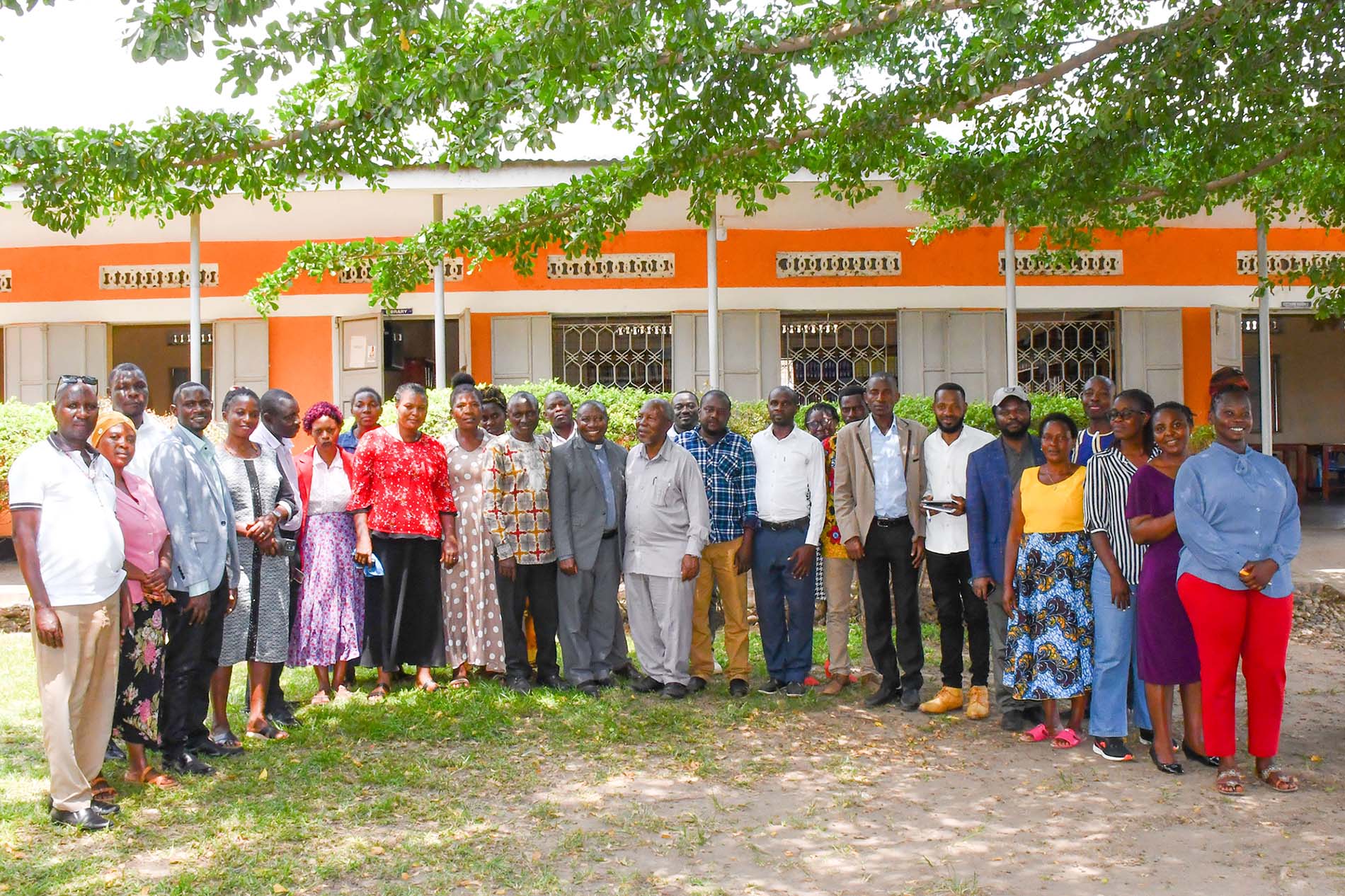 B-SaFFeR-sponsored PhD researchers, including Alex Moruleng and Victo Nabunya, are leading studies to strengthen the scientific and socio-economic understanding of flood resilience. Moruleng is focusing on community-based insurance and the role of solidarity savings in recovery, while Nabunya is developing models to monitor and predict flash floods in the region.
Reverend Ezra Yongeza Mukonzo, who coordinates the Religious Fraternity of Uganda in the Rwenzori and Tooro sub-regions, pointed out that religious institutions have a critical responsibility in promoting environmental care as a foundation for peace and development. He underscored that disasters disrupt social and economic life, halting education, worship, and livelihoods, and thus, protecting natural ecosystems like rivers should be treated as a spiritual obligation.
According to Senior Water Officer Kizito Gerald Babi from the Albertine Water Management Zone in the Ministry of Water and Environment, the initiative represents more than just a training program; it is the construction of a complex, interlinked system that enables communities to adapt to recurring hazards. He observed that the project is transforming ordinary participants into local researchers and champions of resilience whose contributions will influence future policies and practices.
If the ambitions of B-SaFFeR take root, Kasese District may soon become a model for community-driven disaster risk reduction in Uganda, where resilience is built not only through infrastructure and policy, but through knowledge, savings, and the quiet strength of collective action.