Issa Ndungo

Issa Ndungo

Assistant Lecturer

Units

Contact Details

Research Platforms

Issa Ndungo – Mathematics Educator, Researcher, and Leader in Mathematics Education
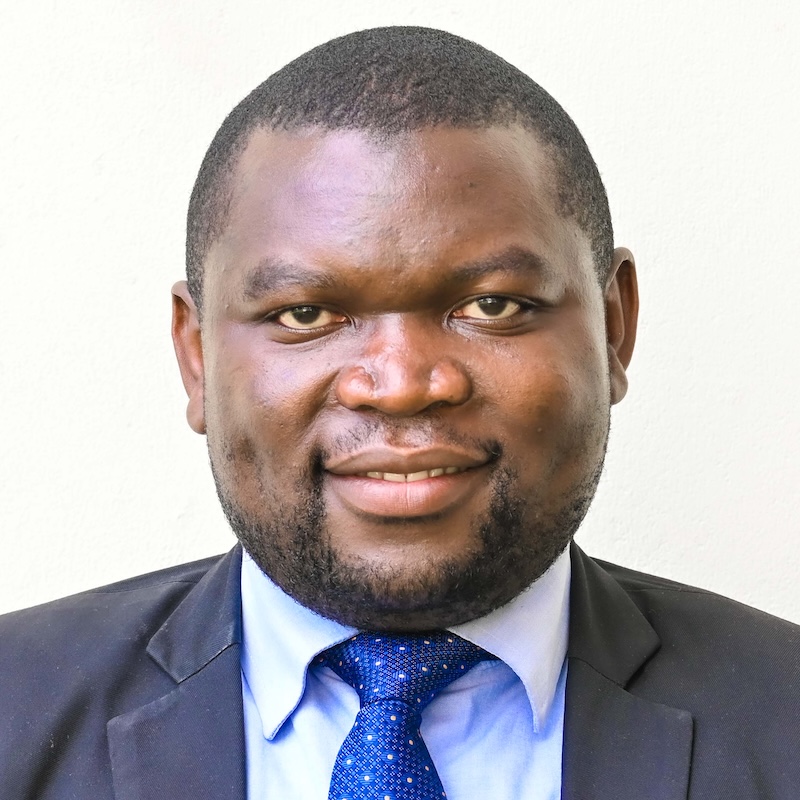
Issa Ndungo is an experienced educator, researcher, and academic leader specializing in mathematics education and instructional innovation. He is an Assistant Lecturer in the Faculty of Science, Technology and Innovation at Mountains of the Moon University (MMU), Uganda. In addition to his teaching responsibilities, he is the Curriculum Development and Review Coordinator. He formerly served as Head of the Pre-service Education Department, where he led curriculum reforms and expanded enrollment across programs.

Issa holds a Bachelor of Science in Education (Mathematics/Economics) and a Master of Science in Mathematics (Pure Mathematics). His early research addressed student retention in primary schools and advanced combinatorial design theory. His  PhD in Mathematics Education focuses on Transformation Geometry through the Van Hiele Theory of Geometric Reasoning and Phased Instruction. His research compares Conventional Van Hiele Phased Instruction (CVHPI) and Technology-Enhanced Van Hiele Phased Instruction (TVHPI) using GeoGebra, with a strong methodological foundation in Difference-in-Differences (DiD) analysis, Generalized Ordered Logit (GOL) modeling, and moderation and mediation analysis to evaluate learner progress, engagement, and attitudinal change.

Beyond his doctoral study, Issa’s research interest lies in Mathematical Modeling and Systems Thinking in Mathematics Education. He applies mathematics as both a content area and a tool for understanding and improving educational processes. His work integrates quasi-experimental designs and implementation science frameworks to examine how innovations are adopted and sustained in classroom settings. This approach bridges theory, practice, and policy, especially in low-resource environments with a high demand for evidence-based planning.

  1. Ndungo, I. (2024). An assessment of the alignment of transformation geometry with Van Hiele levels in Uganda’s lower secondary mathematics curriculum. Turkish Journal of Mathematics Education, 5(2), 33–41. https://tujme.org/index.php/tujme/article/view/108
  2. Ndungo, I., Akugizibwe, E., & Balimuttajjo, S. (2024). Analyzing trends and suggested instructional strategies for geometry education: Insights from Uganda Certificate of Education-Mathematics Examinations, 2016–2022. African Journal of Teacher Education, 13(2), 153–186. https://journal.lib.uoguelph.ca/index.php/ajote/article/view/8106
  3. Ndungo, I., Balimuttajjo, S., & Akugizibwe, E. (2025). Transformation Geometry Attitude Scale (TGAS): Development and Validation for Secondary School Learners in Uganda. International Journal of Advanced Research, 8(1), 140-150. https://doi.org/10.37284/ijar.8.1.2861
  4. Ndungo, I., Nazziwa, C., Kabiswa, W., Opio, P., Akugizibwe, E., & Mpungu, K. (2025). Enhancing STEM Instruction through Indigenous Materials and ICT Integration: A Critical Assessment of Teachers’ Knowledge, Experiences, Attitudes, and Readiness. East African Journal of Education Studies, 8(2), 132-149. https://doi.org/10.37284/eajes.8.2.2872
  5. Ndungo, I., Balimuttajjo, S., & Akugizibwe, E. (2025). Conceptual and Procedural Trajectories in Transformation Geometry: A Comparative Study of Technology-Enhanced and Conventional Van Hiele Phased Instruction. International Journal of Education, Technology and Science, 5(2), 160–184. https://doi.org/10.5281/zenodo.15499128.
  6. Ndungo, I., Balimuttajjo, S., & Akugizibwe, E. (2025). Towards Improved Geometry Instruction: Learners’ Experiences with Conventional and Technology-Enhanced Van Hiele Phased Instruction. The Electronic Journal for Research in Science & Mathematics Education. 29(2), 33-56. https://ejrsme.icrsme.com/article/view/23815
  7. Ndungo, I., Balimuttajjo, S., Akugizibwe, E., & Muwonge, M.C. (2025). Modeling Learners’ Attitudinal Shifts in Transformation Geometry under Technology-Enhanced and Conventional Van Hiele Phased Instruction. African Journal of Research in Mathematics, Science and Technology Education. https://doi.org/10.1080/18117295.2025.2529124
  8. Ndungo, I., Balimuttajjo, S. & Akugizibwe, E. (2025). Refining and expanding the geometry pedagogical improvement cycle (GeoPIC): A conceptual contribution to competency-based geometry instruction. Journal of Research Innovation and Implications in Education, 9(3), 508 – 517. https://doi.org/10.59765/jriie.9.3.47  
  9. Ndungo I, Asiimwe L, Biira M (2020). The relationship between school-based practices and students’ discipline evidence from secondary schools in Kabarole District. Acad. J. Educ. Res. 8(3): 084-091. DOI: 10.15413/ajer.2020.0104
  10. Ndungo. I, Biira. M. (2019): A concept map for teaching-learning logic and methods of proof: Enhancing students’ abilities in constructing mathematical proofs. Merit Res. J. Edu. Rev. 2019 7(9): 101-108. DOI: 10.5281/zenodo.3468495
  11. Ndungo.   I,   Mugizi.   M.   (2019).   The   Teaching   of   Basic Mathematical Concepts to the Pre-service Teachers in Universities. A case of Mountains of the Moon University. Acad. J. Sci. Res. 7(5): 282-287. DOI: 10.15413/ajsr.2019.0109
  12. Ndungo. I, Mbabazi. A (2018). Institutional and communication factors affecting students’ decisions to choose a university: The case of Mountains of the Moon University, Uganda. Acad. J. Educ. Res. 6(10): 257-262. (DOI: 10.15413/ajer.2018.0128)
  13. Ndungo. I, Biira. M (2018), Teacher quality factors and pupils’ achievement in mathematics in primary schools of Kyondo, sub-county, Kasese District, Uganda. Acad. J. Educ. Res. 6(7): 191-195. (DOI: 10.15413/ajer.2018.0117)
  14. Ndungo. I, Sarvate. D (2016), GDD (n, 2, 4; λ1, λ2) with an equal number of even and odd blocks.  Discrete Mathematics. 339:1344-1354. DOI: 10.1016/j.disc.2015.11.004
  1. 2016 to 2019: Leadership Education project in Kabarole district funded by KOI  In this Project, my roles included developing training materials, training primary school teachers on leadership programs, and assessing the impact of the training program on learners’ leadership skills in the Kabarole District. (Completed)
  2. 2021 to 2022: Data governance in newly created cities in Uganda, under UNIRI and ToroDe In this project, my role was to collect, analyze, and report the findings on the baseline study of urban data governance in Uganda under the Open Data Analytics (ODA) program. ( Completed)
  3. 2022: Management of Health Data Process in East Africa: Project under ToroDe In this project, my role was to transcribe the qualitative data, analyze it, and provide a report. (as a consultant, completed)
  4. 2023: Exploring the Impact of the Digitalization Legal & Policy Framework on Inclusive Development in Uganda- ToroDev and GIZ project: In this project, my role was to review the national strategies and surveys related to digitalization and produce a report. (as a consultant, completed)
  5. 2023: The Interplay among Instructional Strategies, Learners’ Geometry Attitudes, and Van Hiele Levels of Geometric Reasoning: This is the PhD project in which I am the principal investiga (Ongoing)
  6. 2023: Analysis of Disease burden in the Rwenzori Region using Bayesian parametric methods: A Faculty of Science project at In this project, my role was to conduct a literature review, develop data collection tools, and participate in the data collection. (As a Co-PI, Completed)
  7. 2024: Enhancing Practical-Based STEM Teaching through Indigenous Resources and ICT tools, A Faculty of Science project at MMU. In this project, I serve as the Co-Principal Investigator (Co-PI), and my responsibilities include developing data collection tools, mobilizing participants, and engaging in data collection, analysis, and report writing. (Completed)
  8. 2025: Development of the Framework for STEM subjects on the use of Indigenous materials and ICT tools for lower secondary school curriculum (Ongoing)

Research is at the heart of any academic institution, and as such, Issa has fully participated in the University’s research activities. He has supervised 30 diploma students, 28 undergraduate students, and three graduate students. He has also participated in research workshops at the school and university, and developed research policies, such as the 2018 School of Education Research Guide.