
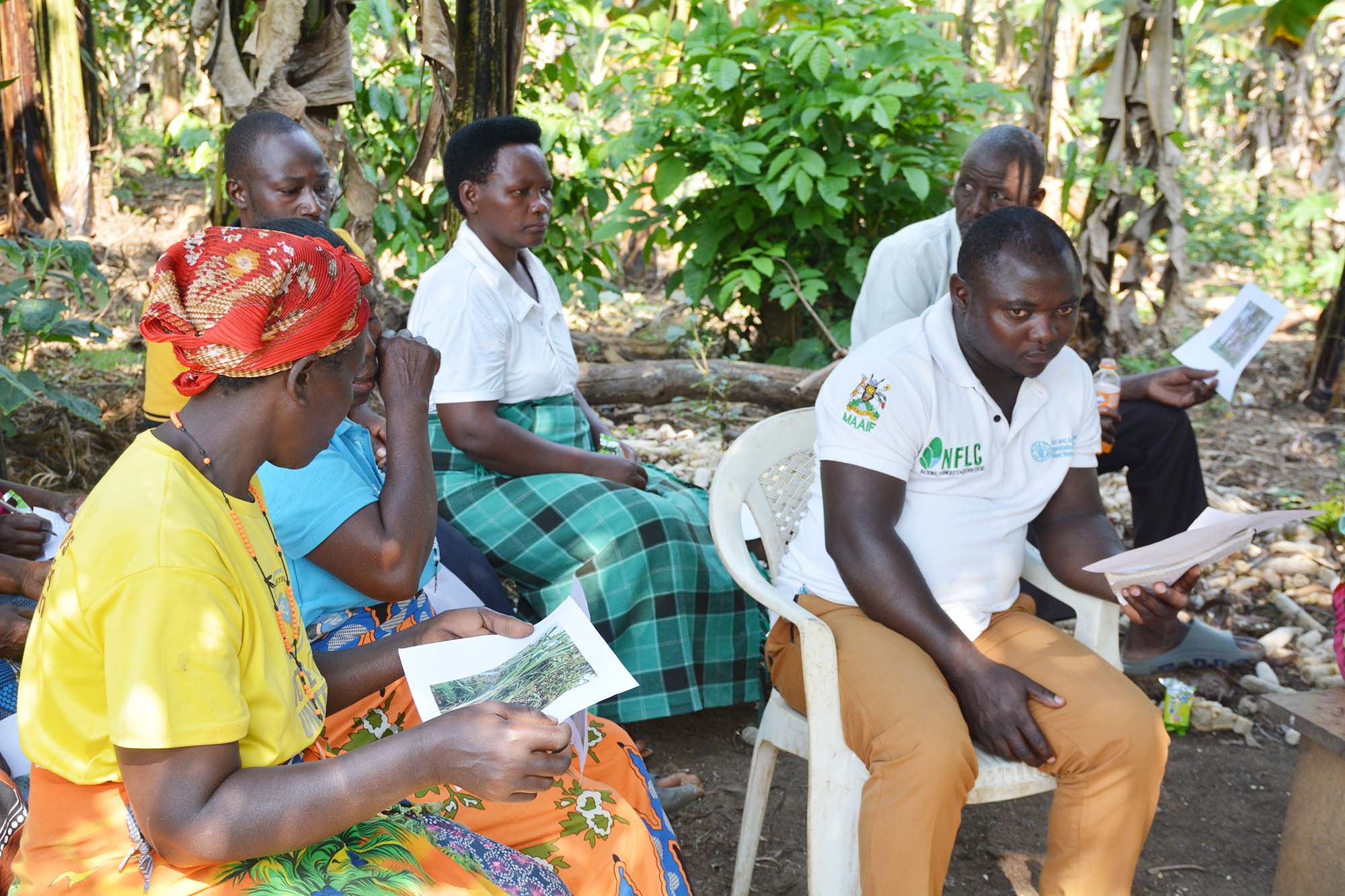
Academics from the Faculty of Agriculture and Environment at Mountains of the Moon University (MMU) have advised maize farmers in Kamwenge District to adopt crop rotation and diversify their agricultural practices to improve yields and soil health.
This guidance was shared during a training under the Careful Irrigation Project held on July 30, 2025, in Rushango I Village, Kabambiro Sub-County, Kamwenge District.
Once a leading maize-producing district in Western Uganda, Kamwenge has experienced a decline in output due to environmental degradation, particularly deforestation for agriculture, charcoal burning, and infrastructure development. These activities have led to prolonged droughts and soil exhaustion, forcing farmers to shift toward more sustainable crops like coffee and bananas.
Dr. Mary Ekyaligonza, a lecturer from the Department of Natural Resources, Tourism, and Environment, cautioned against monoculture practices. “Growing the same crop on the same land year after year depletes soil nutrients, increases pests, and reduces biodiversity,” she said. She recommended intercropping and sequential planting of different crops to optimize land use and restore soil fertility.
In the same training, Akoraebirungi Benedict emphasized best practices in livestock farming, including proper feeding, sanitation, record keeping, and adequate housing. He encouraged farmers to grow perennial crops such as coffee on a larger scale for both food security and commercial purposes.
The training also stressed the use of organic manure, proper spacing, terrace digging, agroforestry, and environmentally friendly farming methods.
Farmers expressed appreciation for the training. Donati Agaba, a banana farmer, committed to reducing over-cultivation, while Leticia Kebirungi, a goat farmer from Kengoma I Village, said she gained new insights on mulching and organic fertilization. Regina Kyomugisha from Rushango I Central Farmers’ Association pledged to focus more on vegetable growing and better crop management techniques.
Despite these efforts, farmers still face challenges such as poor road networks, low market prices, fake agrochemicals, and limited access to farm tools.
The Careful Irrigation Project is a collaborative initiative between MMU and JESE, with funding from IHE Delft University in the Netherlands. It aims to promote agroecological practices and minimize environmental impact across the Rwenzori region.
Written by: Tumwebaze Phillip