
Partners implementing the Strengthening Smallholder Farmer Resilience to Climate Change through Joint Learning, Development and Evaluation of Contextualized Solutions (SFR2CC) project have concluded a five-day engagement in the Kigezi Subregion with a field visit to Farmer Field Schools in Kamwezi Subcounty, Rukiga District.
The meeting, hosted by Kabale University at Cephas Inn Hotel in Kabale from 10th–14th August 2026, called together representatives from Mountains of the Moon University (MMU), Kabale University, Joint Efforts to Save the Environment (JESE), Kigezi Women in Development (KWID), project researchers, coordinators, scholars and other project stakeholders.
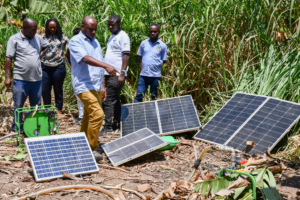
The engagement provided an opportunity for partners to review project progress, reflect on implementation challenges and lessons learned, finalise outstanding activities for 2026 and develop coordinated priorities and work plans for 2027. Discussions also focused on strengthening research and innovation in water resources management, irrigation and climate-resilient agriculture.
A key component of the engagement was the visit to Kamwezi Farmer Field Schools, where partners moved from the meeting room to the farms to interact directly with farmers and Trainers of Trainers (ToTs).
The visit provided an opportunity to observe how knowledge and practices promoted through SFR2CC are being applied in real farming environments, particularly in addressing water challenges and the effects of climate variability in the highland areas of Kigezi.
During the field visit, farmers and Trainers of Trainees(ToTs) shared their experiences with the project, highlighting practices they have adopted through the trainings and how these are influencing their farming systems.
Kimono Angella, a farmer from Kabuhangwa Village, demonstrated how she uses an irrigation system to supply water to her coffee and banana plantations. She also adopted a special mulching technique locally known as “akabafu,” which she learned through the SFR2CC project trainings.
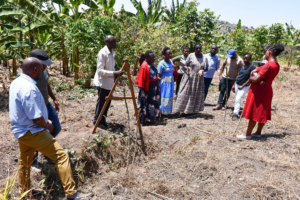
According to Angella, the practices have helped her maintain a more sustainable farming system despite the challenges associated with farming in the highland environment.
Another farmer, Barisigara Wickliff from Nyamabale Village, Nakashekye Parish, shared his experience with the trench system introduced through the project. He explained that the practice has created an opportunity for farmers to tap and manage water, helping them make better use of available water resources while reducing the effects of water shortages on their farms.
The experiences shared by the farmers provided partners with practical evidence of how farmer-led learning and contextualised solutions can contribute to climate resilience. The field interactions also enabled researchers and project partners to listen directly to farmers, understand the challenges they continue to face and identify areas requiring further support.
Associate Professor Violet Kisakye, SFR2CC Project Coordinator and Principal Investigator, said the engagement had provided an important opportunity for partners to take stock of the project’s progress, identify areas that require further attention and agree on priorities for the next phase of implementation.
She noted that the field visit to the Farmer Field Schools was particularly valuable because it allowed partners to see how farmers are applying knowledge and practices gained through the project and to hear directly from communities about their experiences and remaining challenges.
The SFR2CC project continues to focus on strengthening the capacity of higher education institutions and smallholder farming communities in the Rwenzori and Kigezi regions to develop and apply practical solutions that enhance resilience to climate change, improve water management and promote sustainable agricultural livelihoods.