
Mountains of the Moon University (MMU) has taken another significant step towards transforming agricultural extension services through technology after convening a multi-stakeholder engagement to validate and refine the MiSoil mobile application an innovative artificial intelligence-powered platform designed to improve soil fertility management among farmers.
The engagement brought together district and city extension officers, farmers, researchers, academia, students, and private sector actors to provide practical feedback on the application’s design, usability, and functionality before its official rollout.
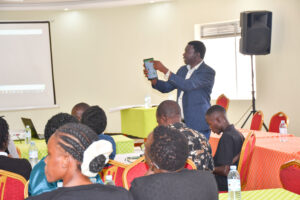
Developed under the leadership of Dr. Wachal Cosmas, the MiSoil App seeks to bridge the information gap that continues to limit agricultural productivity by providing farmers with free, accessible, and evidence-based soil fertility advisory services directly on their smartphones.
The application combines artificial intelligence with community learning to enable farmers to assess soil fertility, calculate fertilizer requirements, access educational resources, and interact with fellow farmers through an integrated discussion forum.
Speaking during the engagement on behalf of the university management, Dr. Kayingo Jacob emphasized that agriculture requires location-specific solutions because soil conditions vary from one area to another.
“Farmers need solutions that are adapted to their specific environments. MiSoil is responding to that challenge by bringing soil fertility information directly into the hands of farmers through technology. Ultimately, our goal is not just to develop an application, but to ensure that farmers achieve higher productivity, higher incomes, and improved livelihoods.”
Dr. Kayingo further reaffirmed MMU’s commitment to developing practical innovations that respond to community challenges while producing graduates capable of transforming Uganda’s agricultural sector.
Project lead Dr. Wachal Cosmas explained that the MiSoil App was developed after recognizing that many farmers struggle to access affordable soil testing services and timely agricultural advisory support.
“Farmers should not have to travel long distances or wait weeks to receive advice on soil fertility. MiSoil places expert knowledge in their hands through artificial intelligence and practical learning resources. By making soil information simple, free, and accessible, we are helping farmers make better decisions that translate into increased crop yields and household incomes.”
Sunday Robert a student of Mountains of the Moon university described the engagement as an eye-opening learning experience that demonstrates the important role university students can play in developing practical solutions for society.
“As students, it is inspiring to see research being translated into innovations that directly benefit communities. MiSoil shows that technology can solve real agricultural problems, and it motivates us to become innovators who create solutions for our country.”
Agricultural extension officers who attended the engagement welcomed the initiative, saying the application will complement existing extension services by providing farmers with timely information whenever they need it.
Ms. Jane Birungi, a farmer from Busoro Subcounty, welcomed the innovation, describing it as a timely solution to one of the biggest challenges faced by smallholder farmers, limited access to reliable and practical agricultural information.
“Sometimes we plant crops without knowing what our soils actually need. If this application can guide us on fertilizers and good soil management practices, it will save us money, improve our harvests, and help us learn continuously.”
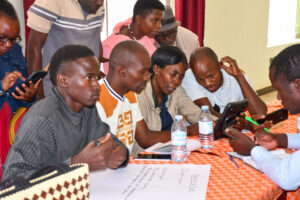
Participants spent the day testing various features of the application, including its AI-powered soil fertility detection tool, fertilizer calculator, digital learning resources, and interactive farmer forum. They also shared recommendations aimed at improving user experience, language accessibility, and the relevance of advisory information across different farming systems.
Once launched, MiSoil is expected to improve farmers’ access to soil fertility information, promote sustainable land management practices, increase agricultural productivity, strengthen food security, and contribute to poverty reduction across Uganda.
Derrick Mugume
Public Relations and Marketing Unit